Contents
- Who is Harlequin in The Freak Circus?
- The Theatrical Origins: Commedia dell’arte Reimagined
- Personality & Core Character Traits
- The Deadly Rivalry: Harlequin vs. Pierrot
- The Tragic Past: Columbina’s Death and Harlequin’s Transformation
- Gameplay Role & Route Information
- The Monologue: Harlequin’s Performance and Lore
- Harlequin’s Obsession Mechanics & Psychology
- Comparing Harlequin’s Two Natures: Game Player vs. Tragic Figure
- Comparison Chart: Harlequin vs. Pierrot
- Routes and Endings: Future Content
- Community Reception and Theories
- Navigation Tips for Harlequin’s Route
- The Theatrical Monologue and Worldbuilding Significance
In the shadowy realm of dark yandere visual novels, few characters embody theatrical menace quite like Harlequin from The Freak Circus. This comprehensive character guide explores the trickster performer who transforms competition into deadly obsession, revealing the tragic past and calculated manipulation that define one of indie gaming’s most compelling antagonists. Whether you are investigating his motivations for pursuing the protagonist, analyzing his rivalry with Pierrot, or uncovering the truth behind Columbina‘s tragic death, this article serves as your definitive resource for understanding The Freak Circus Harlequin character in all his charismatic complexity. Unlike the silent melancholy of his rival, Harlequin openly pursues dominance through charm, wit, and psychological warfare, making him the openly dangerous counterpoint to Pierrot’s deceptive menace. Through careful examination of his personality traits, theatrical origins, tragic backstory, and narrative significance, players and fans can appreciate how The Freak Circus reimagines the classic Commedia dell’arte archetype into a modern psychological horror protagonist.
Who is Harlequin in The Freak Circus?
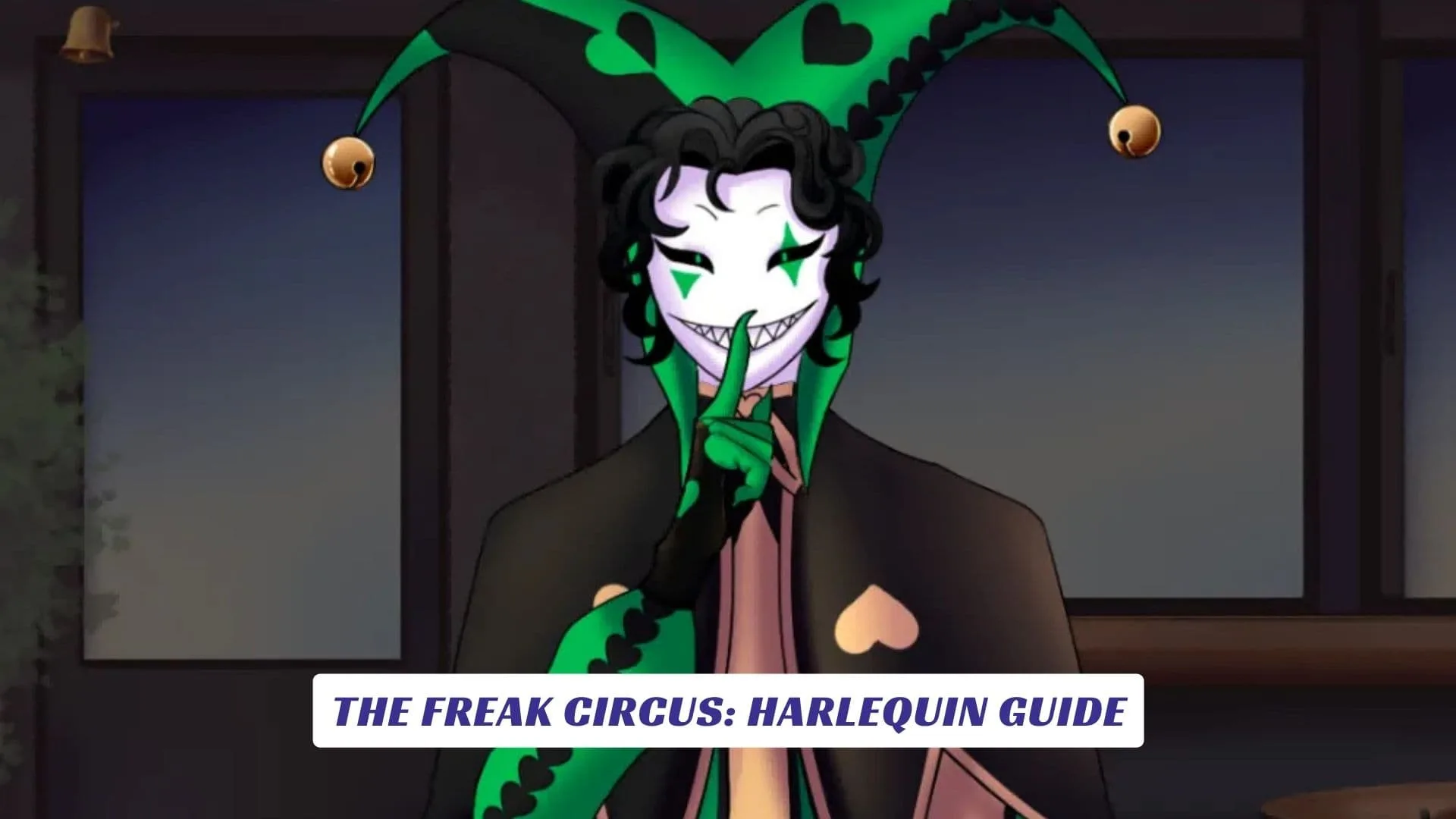
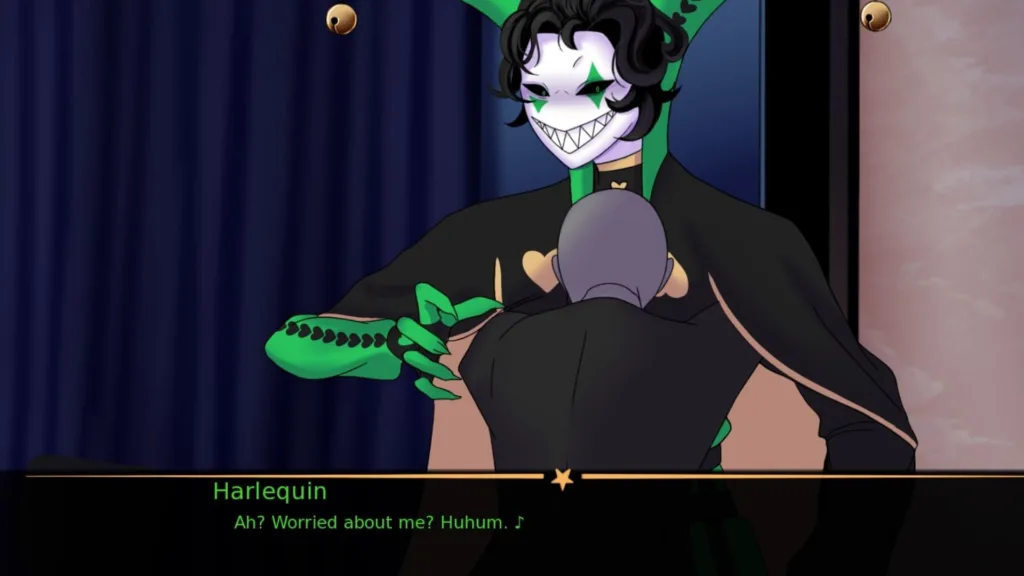
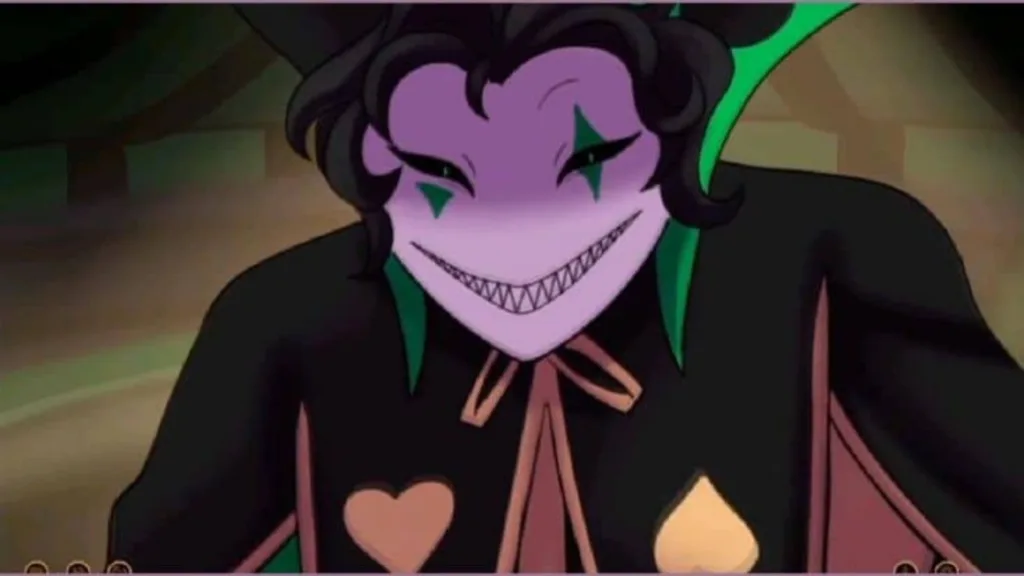
Harlequin stands as the primary rival love interest in The Freak Circus, representing the charismatic trickster archetype taken to dangerous extremes. Standing at 182 centimeters (six feet tall), he cuts an imposing figure on the circus stage, immediately distinguishable from other performers through his vibrant, diamond-patterned theatrical costume and the stronger cologne he deliberately wears to stand out. His personality inverts Pierrot’s melancholic silence; Harlequin is loud, manipulative, talkative, and openly expressive about his nature. He is the stage performer who thrives on chaos, embraces theatricality, and views all interactions—including love and obsession—through the lens of competition and conquest.

The Theatrical Origins: Commedia dell’arte Reimagined
The character of Harlequin draws inspiration from the Italian Commedia dell’arte tradition, where Arlecchino served as a clever servant known for acrobatic prowess, sharp wit, and distinctive colorful diamond-patterned costumes. In The Freak Circus, game creator Neko Bueno maintained the original archetype’s cleverness and showmanship while transforming it into a modern psychological horror character with layers of obsession, manipulation, and genuine danger. This adaptation proves particularly effective because the theatrical trickster archetype naturally lends itself to deception and calculated performance—Harlequin’s very nature as a performer makes his manipulation feel authentic to his character rather than inconsistent or contrived.
Personality & Core Character Traits
Harlequin exhibits a distinctly different psychological profile from the other circus performers. His defining traits include charisma that borders on hypnotic, a calculating mind hidden behind playful theatrics, competitive jealousy that drives much of his behavior, and an openness about his dangerous nature that paradoxically makes him seem less threatening than Pierrot’s quiet menace. He is fundamentally manipulative—viewing everything, including human relationships, through the lens of advantage and dominance. Unlike Pierrot, who experiences genuine, albeit twisted, obsession, Harlequin’s interest in the protagonist stems entirely from Pierrot’s attraction to them. In other words, the protagonist becomes a prize to be won in the greater competition between circus rivals, rather than an object of authentic desire. This distinction matters: Harlequin knows he is a trickster and appears comfortable with that identity. He makes no pretense of genuine love, instead offering theatrical devotion and seductive manipulation as honest expressions of his nature.
The Deadly Rivalry: Harlequin vs. Pierrot
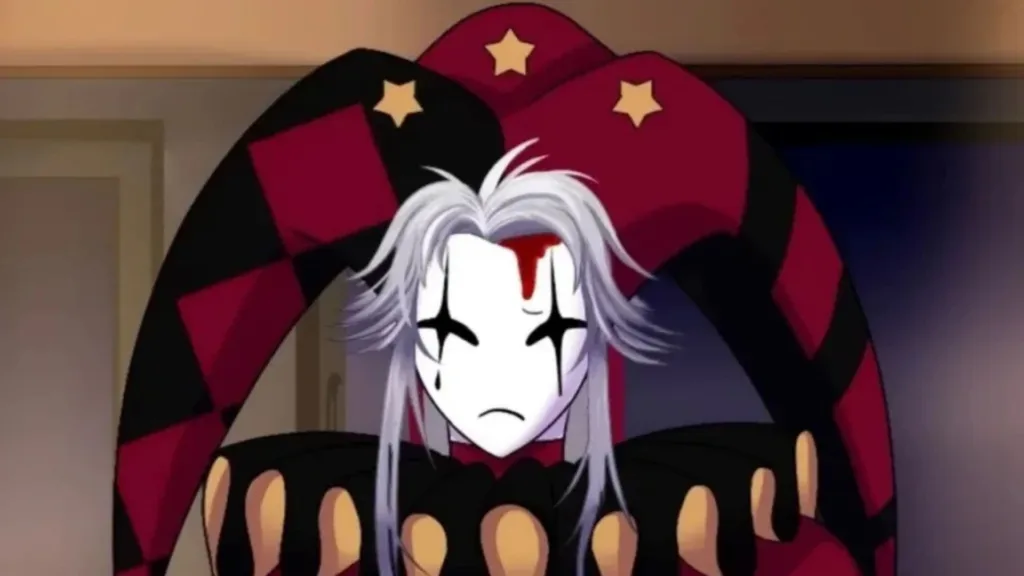
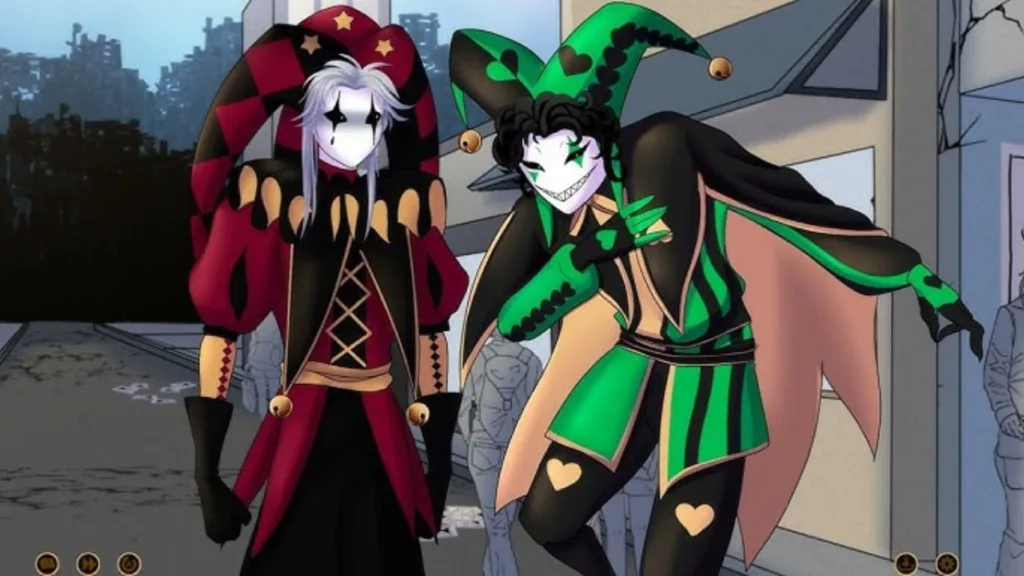
The dynamic between The Freak Circus Harlequin and Pierrot defines much of the game’s central tension. While Pierrot embodies the silent, melancholic sad clown who watches the protagonist with desperate possessiveness, Harlequin represents the vocal, manipulative trickster who openly pursues. Their differences extend beyond aesthetics or behavioral style; they represent fundamentally opposed philosophies of obsession. Pierrot loves silently, desperately, with an intensity that borders on religious devotion. Harlequin loves competitively, treating the relationship as a game to be won against his rival. The protagonist, in Harlequin’s eyes, is not a cherished individual but rather the playing piece through which he defeats Pierrot.
This rivalry appears rooted in longstanding tension predating the game’s events. Both performers occupy the same circus, sharing stages and audience attention for an indeterminate time. The arrival of the protagonist—particularly the protagonist’s intersection with Pierrot—activates Harlequin’s competitive instinct and creates the opening through which his interest emerges.
The Tragic Past: Columbina’s Death and Harlequin’s Transformation
Understanding The Freak Circus Harlequin requires examining the character’s traumatic past and the event that defined his current psychological state. Through a theatrical monologue performed early in the game, Harlequin reveals the founding myth of the circus and, implicitly, his own role in a tragedy that fundamentally shaped his character arc.
The Story Within the Story:
In the original circus performance, a female performer named Columbina existed as a contested love interest between both Pierrot and Harlequin. This mirrors classical Commedia dell’arte narratives where Columbine must choose between her suitors. However, The Freak Circus departs from tradition: in the classic plays, Columbine chooses Harlequin, but in this darker reimagining, Columbina chose Pierrot instead, repeatedly rejecting Harlequin’s affections despite his efforts to win her devotion.
The Killing:
Confronted with sustained rejection and the sight of Columbina favoring his rival, Harlequin killed her. The method was violent and brutal—he ripped her chest open in what fans have connected to the legendary “Harlequin’s Kiss” or “Kiss of Doom,” a theatrical move allegedly unique to harlequin characters. This was not a quick mercy or passionate crime of the moment; it was a calculated, violent expression of obsessive rage when he could not control or possess her.
The Ambiguity:
The game deliberately leaves Columbina’s death shrouded in interpretive ambiguity. Players and theorists debate Harlequin’s true motive. Did he kill her purely from jealous frustration? Was it hunger driving the act? Might it have been a misguided attempt to “save” her or “free” her, despite her explicit statements that she did not wish to die? The game offers no definitive answer, and Harlequin displays no obvious remorse, complicating attempts to sympathize with or condemn him. Yet the trauma of losing Columbina—and likely the realization of what his obsession caused—may have fundamentally altered his approach to possession and control, making his pursuit of the protagonist potentially more manipulative precisely because he fears repeating his mistake.
Gameplay Role & Route Information
The Freak Circus presents Harlequin as one of two primary love interests, alongside Pierrot, representing fundamentally different gameplay experiences. To pursue the Harlequin route, players must make the correct choice at the game’s critical first decision point. Choosing passivity results in rejection by all characters, including Harlequin, leading to a “Bad Ending” where the protagonist is consumed by the circus—a grim reminder of the stakes involved.
Successfully pursuing Harlequin requires active engagement with his theatrical personality. The character enjoys the chase and the game, becoming bored by excessive passivity or frustrated by excessive defiance. Players must maintain precarious balance, participating in his competitions while maintaining enough independence to remain interesting. The game encourages strategic save-scumming to explore different dialogue options and observe how Harlequin reacts to various psychological approaches.
The Monologue: Harlequin’s Performance and Lore
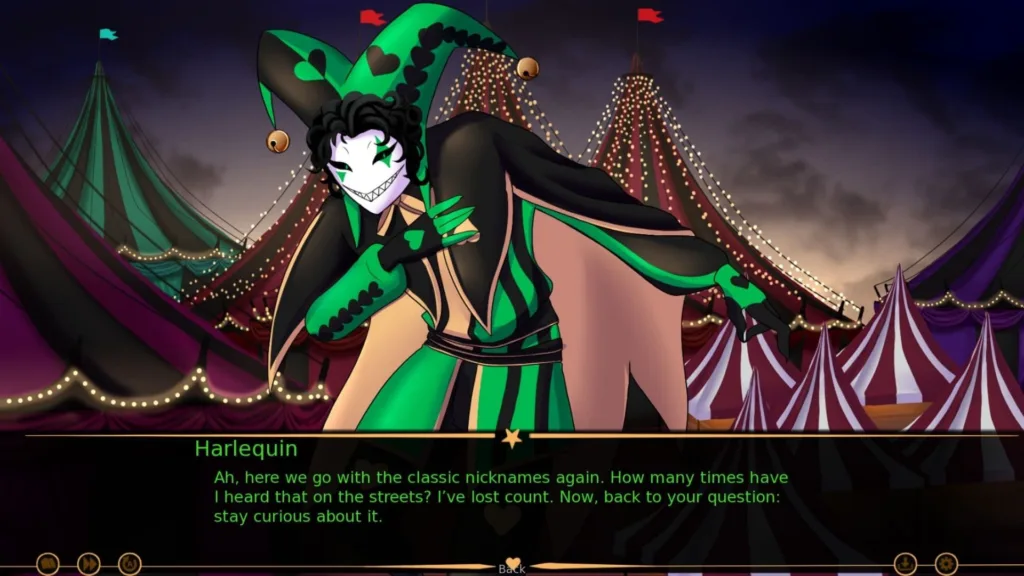
Harlequin’s most significant narrative moment comes through a theatrical performance—a monologue that recounts the circus’s origin story while implicitly revealing his own tragic role. In this performance, he tells of monsters transformed into humans, of an angel who offered salvation before vanishing, and of a new organization born from desperation and hunger. The performance serves multiple narrative functions: it entertains circus audiences, reveals worldbuilding information, and presents Harlequin’s perspective on the events that shaped him. The monologue demonstrates why Harlequin functions as trickster—his performance of truth is so theatrical, so theatrical, that the audience might question what is genuine confession and what is calculated performance.
Harlequin’s Obsession Mechanics & Psychology
The progression from Columbina to the current protagonist reveals Harlequin’s psychological pattern. His obsessions follow a consistent arc: intense competitive interest, escalating possession attempts, and—when faced with loss of control or rejection—violent reaction. What distinguishes his approach to the current protagonist is the potential for greater self-awareness. Having witnessed (and caused) Columbina’s death, Harlequin might consciously attempt to manage his destructive impulses differently. This introduces a fascinating psychological question: Is his current pursuit of the protagonist genuine protection instinct born from trauma, or merely another iteration of the same dangerous competitive game?
Comparing Harlequin’s Two Natures: Game Player vs. Tragic Figure
The Freak Circus Harlequin exists in tension between two characterizations. On one level, he is the confident trickster who views life as entertainment and love as competition—a charming villain without apology. On another level, he is a tragic figure whose uncontrolled obsession led to murder and whose current behavior might represent conscious attempts at redemption or harm-reduction, albeit expressed through continued manipulation. This duality makes him significantly more complex than simple antagonist archetypes. Players must decide whether to interpret his actions as:
- Pure predatory manipulation with no capacity for change
- Genuine attempt to manage dangerous impulses through greater awareness
- Continuation of the same destructive pattern with added self-consciousness
- Performance of concern designed to manipulate the protagonist
No definitive answer exists within the current game state, making Harlequin’s route a genuine test of player perspective and moral framework.
Comparison Chart: Harlequin vs. Pierrot
| Category | Harlequin | Pierrot |
|---|---|---|
| Communication Style | Verbose, theatrical, expressive | Silent, minimal dialogue |
| Primary Approach | Openly pursues; treats as competition | Quietly watches; possesses |
| Motivation Type | Competitive obsession with Pierrot | Genuine obsession with protagonist |
| Danger Presentation | Openly admits dangerous nature | Deceptively seems less threatening |
| Stage Role | The Trickster | The Sad Clown |
| Love Expression | Possessive game-playing | Devotional servitude |
| Jealousy Trigger | Threat of losing game/rival dominance | Threat of losing protagonist’s attention |
| Costume Aesthetic | Vibrant, colorful, eye-catching | Monochromatic, melancholic |
| Cologne/Perfume | Stronger, deliberate scent | Implied subtle fragrance |
| Psychological Strategy | Manipulation through charm | Manipulation through silence and guilt |
Routes and Endings: Future Content
As of January 2026, The Freak Circus remains in development with Day 2 content released and Day 3 content in progress. The game currently offers three open-ended conclusions on the Harlequin route that provide hints at potential futures without full narrative closure. Creator Neko Bueno has announced planned content including:
- Harlequin’s Personal Ending: Dedicated route conclusion for his storyline
- Pierrot’s Personal Ending: Parallel conclusion for the rival route
- Protagonist’s Independent Ending: An ending focused on the player character’s choices and agency
- Group Ending: Likely involving complex dynamics between both clowns and the protagonist
These planned endings suggest that The Freak Circus intends to explore multiple narrative resolutions rather than forcing players toward a single canonical conclusion, allowing different player philosophies to find representation.
Community Reception and Theories
The fanbase has developed substantial investment in Harlequin’s character despite—or because of—his morally complex nature. Community discussions debate whether his Columbina killing was motivated by hunger, jealousy, misguided salvation, or a combination thereof. Fan theories explore whether he is capable of genuine change or merely performing improvement. Some players find Harlequin more sympathetic than Pierrot because his danger is overt rather than disguised; his honesty about his manipulative nature creates perverse trust compared to Pierrot’s quiet menace. Others view him as unredeemable based on his apparent lack of remorse regarding Columbina’s death.
The community has generated substantial fan art, cosplay interpretations, voiced dubbings, and fictional explorations of Harlequin’s character across platforms including YouTube, TikTok, and Reddit communities dedicated to yandere games and male yandere characters.
Successfully pursuing and surviving The Freak Circus Harlequin route requires understanding his psychological triggers and preferences. Players should never choose passivity when action is available; standing by and doing nothing results in death by consumption. Instead, players should engage with his theatrical personality, recognize his manipulations without judgment, and participate in the competitive game he presents while maintaining sufficient independence to remain interesting. Recognizing that his interest in you is rooted in rivalry with Pierrot provides strategic information—emphasizing Pierrot’s interest might intensify Harlequin’s competitive drive, while demonstrating independence from Pierrot might frustrate his game. Using multiple save files to experiment with different dialogue choices allows players to observe how the character responds to various psychological approaches, though players should note that Harlequin is perceptive and may recognize manipulation attempts.
The Theatrical Monologue and Worldbuilding Significance
Harlequin’s performance reveals the circus’s mythological foundation while serving as character development. The story of monsters consuming other creatures, an angel appearing and vanishing, and subsequent transformation into human forms establishes a framework through which the current circus can be understood. This narrative simultaneously explains how supernatural entities became humanoid performers while suggesting that The Freak Circus operates under different rules and logic than reality. The performance also demonstrates why Harlequin functions as trickster—his delivery of world-defining information through theatrical performance creates uncertainty about what is literal truth versus performed metaphor.
Content Warning: The Freak Circus is intended for mature audiences (18+) and contains dark psychological themes, yandere behavior, manipulation, violence, and references to murder. Player discretion is advised.