In Wizardry Gaiden: Sentou no Kangoku – Prisoners of the Battles, players step into a classic first-person, party-based dungeon-crawler RPG adventure rooted in the original Wizardry ethos. This Japan-exclusive spin-off (known as Combat Prison) is designed to recapture the series’ “simplicity” and “depth,” faithfully pursuing the original Wizardry fun. Developed and published by Taito for the PlayStation 2 in August 2006 (after an earlier 2005 PC release), the game drops you into the rugged frontier Kingdom of Tramble. You command a newly-formed band of mercenaries under the war chief Halstein, training recruits and fighting to defend the realm. The setting – a harsh borderland laced with dangerous caves – and the emphasis on turn-based combat, character classes, and exploration of deadly mazes give Prisoners of the Battles a distinct retro fantasy feel. (In fact, the Japanese PS2 cover art shown above captures the game’s gritty medieval vibe.)
Overview
Prisoners of the Battles was released by Taito in 2006 (PS2) with roots in a 2005 PC version.The core gameplay follows classic Wizardry conventions: you build a party of heroes (fighters, mages, priests, thieves, etc.) and explore grid-based dungeon floors from a first-person perspective. Combat is fully turn-based, requiring tactical choices of spells, skills, and positioning against monsters. The game’s design hearkens back to retro RPGs – no hand-holding maps – and focuses on rewarding careful strategy. As Taito’s description emphasizes, Prisoners of the Battles is meant to “thoroughly pursue the original fun of Wizardry”, delivering the feeling of diving into a mysterious underground prison filled with traps and foes. Technical limitations of the era mean blocky 3D graphics and MIDI-style music, but these nostalgic elements only reinforce the classic dungeon-crawl atmosphere.
Story and Setting
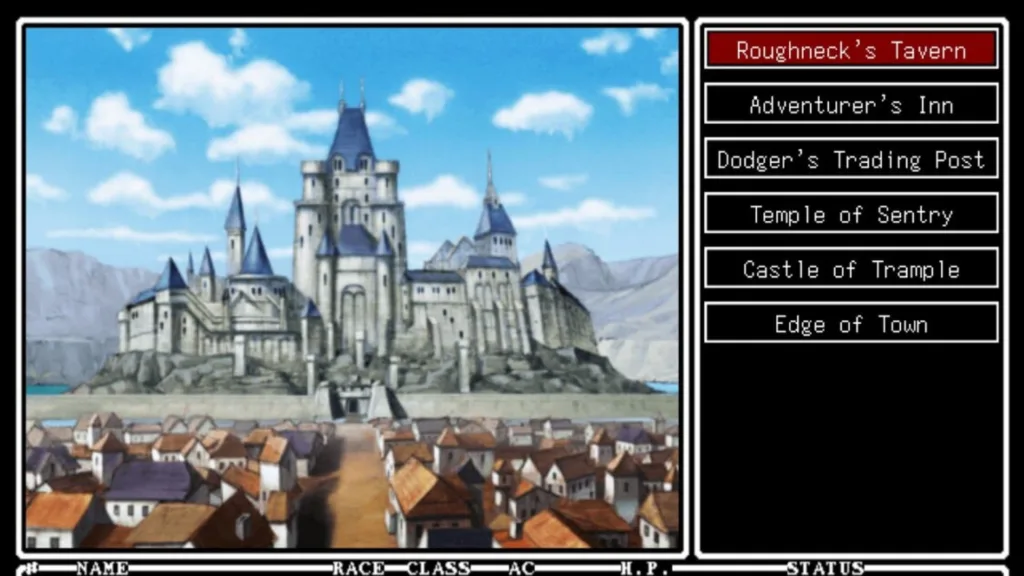
The narrative plunges the party into a frontier kingdom shaken by sudden prosperity and peril. Halstein is the military chief of the tiny new Kingdom of Tramble (sometimes spelled Trunbull). When rich ore is discovered in a nearby wilderness cave, outsiders flood in hoping to strike it rich. With the army stretched thin, Halstein recruits daring adventurers (your party) to train and hunt monsters in the mines. Official descriptions frame the opening: “Halstein was greatly troubled… He bestows his wisdom upon young mercenaries and adventurers, that they would go on to become soldiers of renown”. Soon the ore discovery turns into a crisis: treasure-seeking mercenaries weaken the realm’s defenses and demon-haunted dungeons test the recruits’ mettle. The tavern beneath Tramble Castle fills with heroes dreaming of rewards, but “none could have possibly imagined the tragic fate that would soon befall them”. In other words, what starts as a simple training mission quickly devolves into a desperate fight for survival deep underground. This grim fantasy backdrop (war, gold fever, conspiracies) provides context for the dungeon expeditions you will undertake.
Gameplay and Features
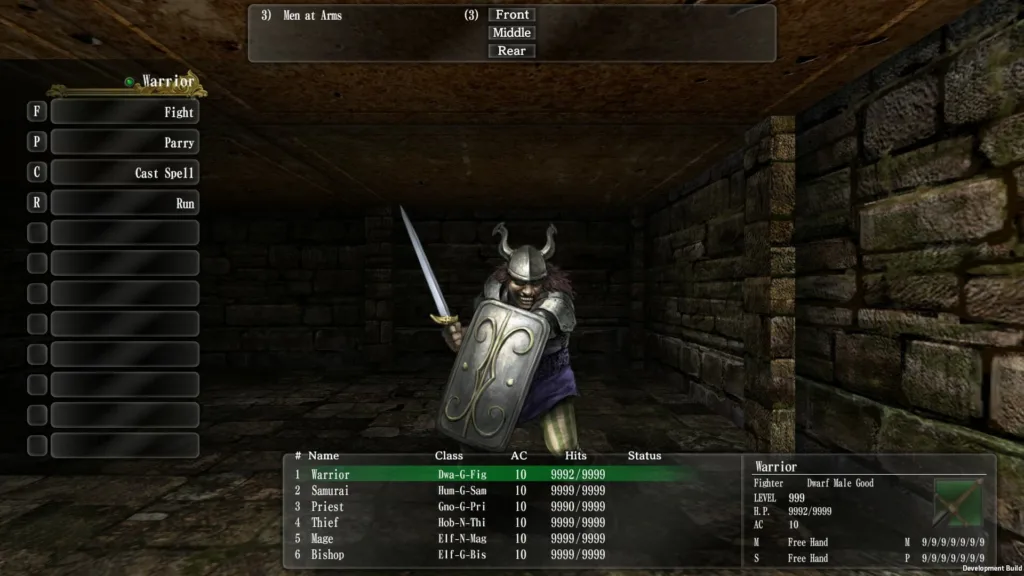
As an old-school dungeon RPG, Prisoners of the Battles offers deep, methodical gameplay. You assemble a party of up to six characters with various classes (Fighters, Thieves, Bishops, Samurai, Lords, Ninjas, Mages, Priests, etc.) and manage their stats, equipment, and spells. Exploration is done on a tile-by-tile, grid-based map – pressing forward, turning, and discovering secret doors or traps. Combat is turn-based: each side acts in rounds, with characters attacking, casting spells, or using items. Strategic choices matter (for example, Ninjas are weak but have high critical hit chance, Samurai can learn mage spells, and Lords can learn priest spells).
The released content is unusually large for a single scenario. In total there are three main labyrinth dungeons plus a bonus hard labyrinth to conquer – about forty floors of caverns, corridors, and treasure vaults in one campaign. (Legend has it the extra dungeon plays with roguelike mechanics, making it even more challenging.) Each dungeon branch contains keys, puzzles, and fearsome monsters guarding valuable loot. Indeed, treasure-hunting itself is a game in Prisoners of the Battles. Most weapons, armor, and rings you find can receive random magical properties, meaning each enchanted item is unique. This encourages careful decision-making about which loot to grab or discard. Between long dungeon crawls, the game expects resource management – healing up at inns or swapping party members to cover weaknesses – just like classic Wizardry. The developers also included many balance tweaks (relative to earlier Wizardry titles) and extra events for a modernized challenge.
Development and Release
Wizardry Gaiden: Sentou no Kangoku has an interesting release history. It first appeared in Japan on Windows (PC) on March 25, 2005, developed by IRI Commerce & Technology and published by IID. A PlayStation 2 port, handled by Taito Corporation, followed on August 3, 2006. (Taito remained developer and publisher of record for the PS2 edition.) Years later, in 2012–2013, a mobile version was released for iOS and Android (with 59 Studio involved as a co-developer/publisher on iOS). These Japanese releases meant Prisoners of the Battles was mostly unheard of in the West for a long time.
In a modern twist, the scenario was revived for Western audiences: when Wizardry: The Five Ordeals was localized for PC, the Prisoners of the Battles dungeon was offered as paid DLC. Developer 59 Studio (with publisher Game*Spark) announced in March 2023 that Prisoners of the Battles would launch as DLC on March 30, 2023 for the English Steam release. In other words, a dungeon first explored by Japanese PC/PS2 players in 2005–2006 finally reached a global PC audience in 2023. (A Nintendo Switch port of this DLC is also slated for January 2025.) This re-release has introduced the game’s challenge and story to a new generation of Wizardry fans.
Legacy And Revival
Though it flew under the radar for many years, Prisoners of the Battles has earned a cult following among dungeon-RPG enthusiasts. It represents the tail end of the Wizardry Gaiden series (a spin-off line of Wizardry games exclusive to Japan). Its traditional design and high difficulty pay homage to the franchise’s roots, which has been highlighted in retrospectives. The game’s production team also included well-known fantasy RPG artists and composers: for example, cover artist Jun Suemi (famous for many Wizardry and retro-RPG box arts) created the key artwork, while composers Kenichi Koyano and Hitoshi Sakimoto (among others) scored the music.
With the 2023 DLC, Prisoners of the Battles gained new visibility. Western players and streamers have begun to explore its unforgiving dungeons, praising the nostalgic mechanics or critiquing the dated interface. (User ratings have labeled it “tough” – unsurprising for a classic Wizardry crawl.) Overall, this release as part of The Five Ordeals has cemented Sentou no Kangoku’s place in the Wizardry legacy: it’s now accessible in English and stands as a modern reminder of the series’ decades-long dungeon-crawling tradition.