Contents
If you have ever lost an entire weekend to the strategic thrill of digital cards, you likely understand why we are diving deep into this Slay the Spire Review: The Deckbuilder That Defined a Genre. When Mega Crit Games first unleashed this masterpiece, few could have predicted it would become the gold standard by which all subsequent roguelike deckbuilders are measured. From the moment you select your character to the agonizing defeat at the hands of the Corrupt Heart, the game masterfully blends high-stakes decision-making with infinite replayability. Players are thrust into a procedurally generated tower where every choice matters—from the specific cards drafted into your deck to the path taken across the map—creating a loop that is as punishing as it is addictive. Whether you are wielding the brute force of the Ironclad or the complex orb mechanics of the Defect, the synergy between relics, potions, and card combos creates a fresh puzzle to solve in every single run. It is not just about playing cards; it is about adapting to chaos, managing resources, and understanding enemy intent in a turn-based combat system that feels fair even when it is brutally difficult.
Gameplay Mechanics and Strategic Depth
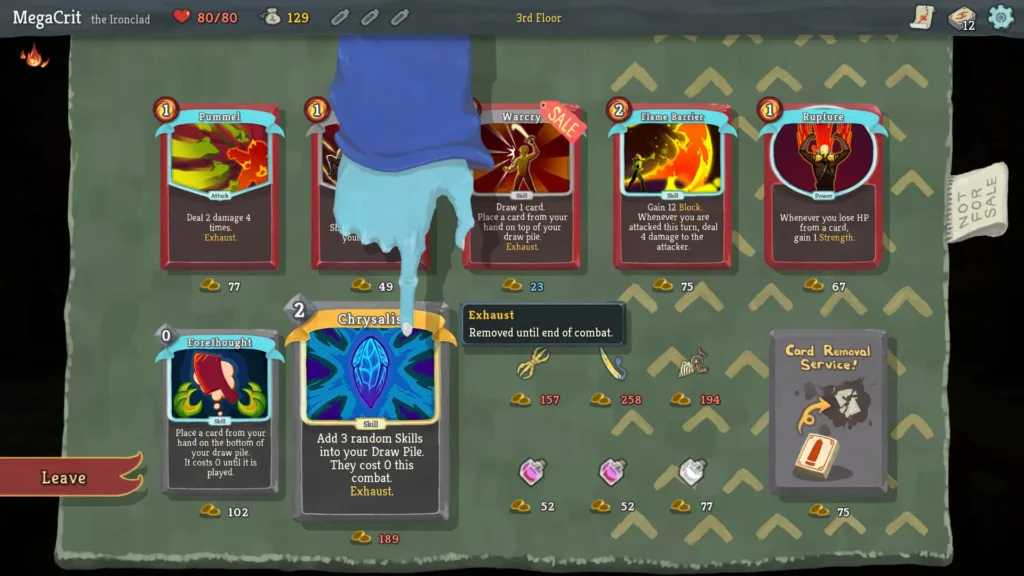
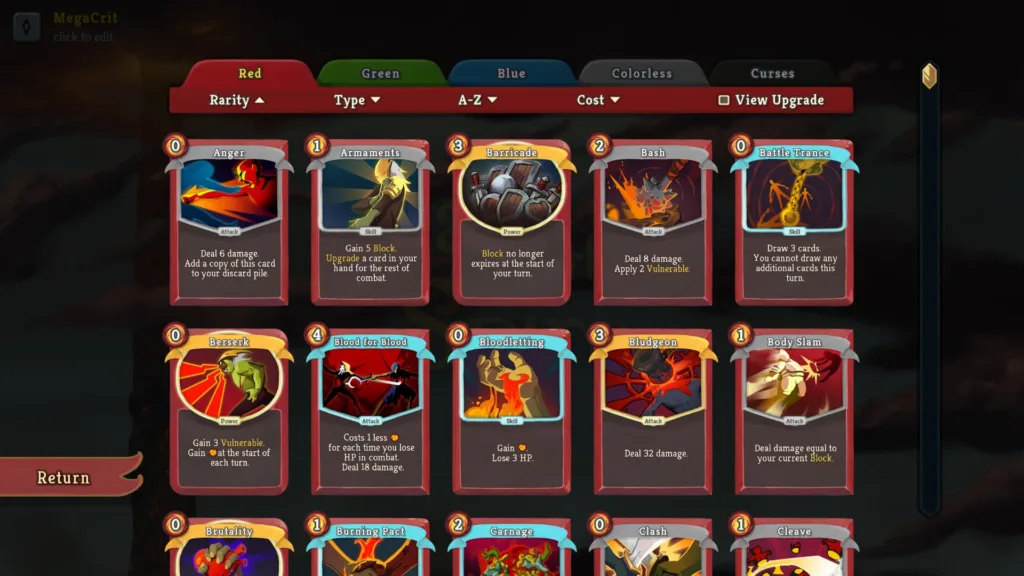
At its core, Slay the Spire is deceptively simple: you have energy, you have cards, and you have enemies who telegraph their next move. However, the brilliance lies in how these systems interact. You start with a basic deck of attacks and defenses, but after every combat encounter, you are offered a choice of new cards to add to your arsenal. This drafting mechanic forces you to constantly evaluate your deck’s current strengths against future threats. Do you take a high-damage attack now to survive the first boss, or do you pick a scaling power card that won’t pay off until much later in the run?
The addition of Relics—passive items that provide unique bonuses—adds another layer of complexity. Some relics might give you extra energy, while others might heal you after combat or fundamentally change how your cards work. A single lucky relic drop can completely pivot your strategy, turning a mediocre run into an unstoppable powerhouse. This synergy between cards and relics is what gives the game its “just one more run” appeal.
Character Diversity and Playstyles
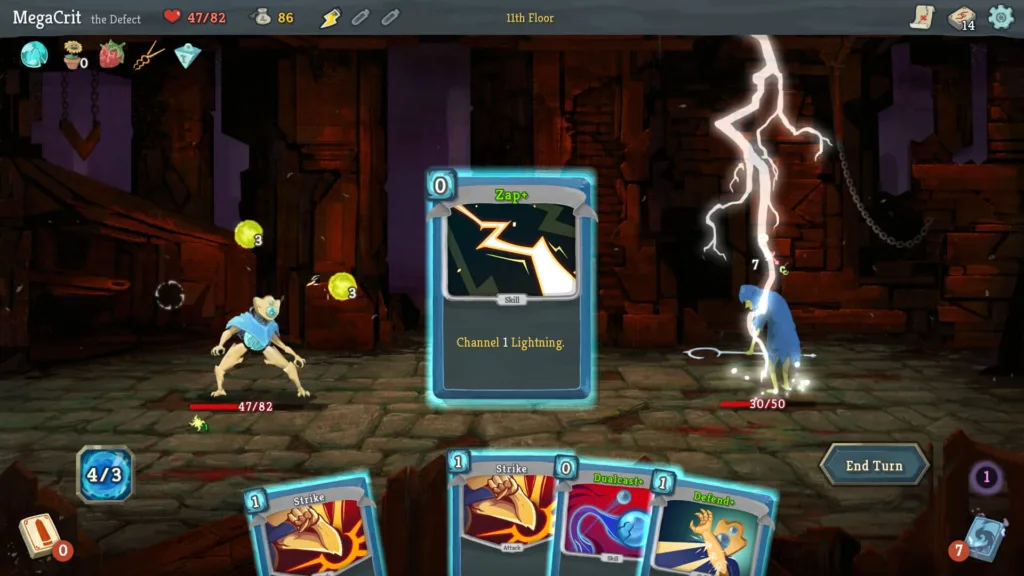
The game features four distinct characters, each with their own unique card pool and mechanics, ensuring the gameplay never feels stale.
- The Ironclad: The starting character who relies on strength scaling and exhaustion mechanics. He is perfect for beginners but has a high skill ceiling for those who learn to manipulate his health points as a resource.
- The Silent: A rogue-like archetype focused on shivs (0-cost attacks) and poison. Her playstyle is often about playing many cards in a single turn or stalling the game while poison ticks away enemy health.
- The Defect: This robotic character introduces “Orbs” that provide passive bonuses at the end of every turn. Managing these orbs requires forward thinking and careful planning.
- The Watcher: A monk who switches between “Stances.” She can deal double damage in Wrath stance but takes double damage in return, creating a high-risk, high-reward rhythm.
Visual Style and Atmosphere
While the mechanics take center stage, the art direction deserves praise for its unique charm. The visual style feels like a quirky, slightly grotesque storybook come to life. The enemy designs are memorable, ranging from looting slimes and cultists to terrifying geometric shapes and giant heads. The animations are snappy and responsive, which is crucial for a game where you might play thousands of cards in a session. Accompanying the visuals is an atmospheric soundtrack that perfectly captures the mood of ascending a mysterious, dangerous spire—it is catchy enough to be memorable, but ambient enough not to distract from the intense calculations happening in your head.
The Verdict
Slay the Spire is a masterclass in game design. It stripped away the bloat often found in RPGs and card games to create a lean, perfect loop of strategy and execution. It respects the player’s time while demanding their full attention. Even years after its release, it remains the absolute benchmark for the genre. If you enjoy strategy, puzzles, or the thrill of constructing a perfect machine out of random parts, this is an essential addition to your library.