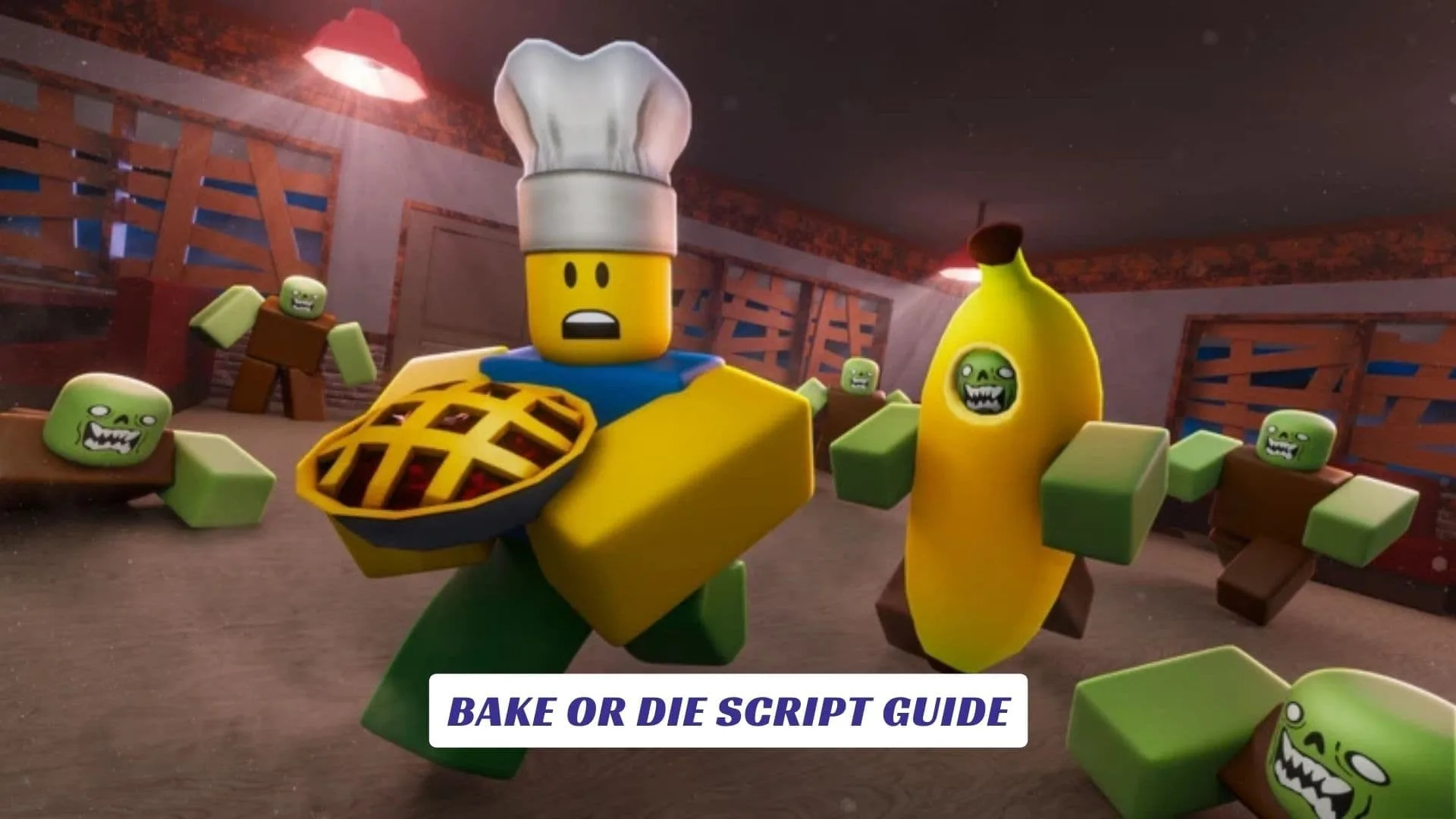
If you are knee‑deep in survival nights at the diner, you’ve probably heard whispers about a Bake or Die Script Guide that can make looting faster, enemies easier to clear, and navigation less of a nightmare. The keyword Bake or Die Script Guide ties into a growing ecosystem of Roblox‑side exploits and utility scripts built around the game’s current meta, wave schedules, looting loops, and build‑up economy. Alongside that, our earlier Bake or Die Codes post already covers official promo tools, so this guide is where we flip the camera behind the scenes and peek at what players are actually injecting into their sessions.cheater+2
Related: Bake or Die Codes
Scripts for Bake or Die are not created by the official developers, but rather by third‑party scripters who export small Lua snippets, often hosted on Pastebin or similar services, then wrap them inside loader strings that you paste into your executor. These snippets can be seen as unofficial “cheats” because they tweak the game beyond what normal controls allow, such as auto‑killing nearby zombies, pulling all items straight to your character, or making enemies and loot visible through walls via ESP.
What Scripts Actually Do in Bake or Die
At the core, Bake or Die scripts are external Lua modules that run on top of the live Roblox client, manipulating how the game reads position, damage, and visibility data. Common categories you’ll see advertised as Bake or Die scripts include: Kill Aura, Bring Items, ESP, auto‑collect, and repair‑assist modules, all designed to compress the game’s normal grinding into a much faster loop. For example, a basic Kill Aura snippet will loop through nearby zombies and force them to take damage every frame, so you effectively clear packs without needing to swing or shoot.
Other scripts focus on convenience, like auto‑pulling ingredients, corpses, and rare drops directly to your inventory or character location, which cuts the walking‑and‑scavenging time in half. Some versions even bundle ESP for zombies, loot, and doors, letting you see where enemies spawn, where ingredients lie, and which paths are safe before committing to a route. Taken together, these small scripts can dramatically change the pacing of Bake or Die, turning chaotic survival into something closer to a low‑stress farming sim.
Some Bake or Die Scripts
<script type="text/lua">
-- Bake or Die: Simple Kill Aura (Concept)
local plr = game.Players.LocalPlayer
local char = plr.Character or plr.CharacterAdded:Wait()

local function killAura()
    for i, v in pairs(workspace:GetDescendants()) do
        if v:FindFirstChild("Humanoid") and v:FindFirstChild("Torso") then
            local hum = v:FindFirstChild("Humanoid")
            local pos = v:FindFirstChild("Torso").Position
            if (char.HumanoidRootPart.Position - pos).Magnitude < 20 then
                hum.Health = 0
            end
        end
    end
end

while wait(0.1) do
    pcall(killAura)
end
</script>
This tiny snippet illustrates a basic Kill Aura logic that loops through everything in workspace, checks for zombies (objects with Humanoid and Torso), and flattens their health when they enter a 20‑stud radius around your character. It mimics the kind of “OP” script hubs ship for Bake or Die, but simplified for educational clarity.
Another common pattern is Bring‑Items or Bring‑Bodies, which pulls specific objects into your reach instead of forcing you to walk to them. It usually looks like this:
<script type="text/lua">
-- Bake or Die: Bring All Items Concept
local plr = game.Players.LocalPlayer
local char = plr.Character or plr.CharacterAdded:Wait()

local foldersToCheck = {workspace:GetChildren()}

local function bringObjects()
    for _, folder in pairs(foldersToCheck) do
        for i, obj in pairs(folder:GetDescendants()) do
            if obj:IsA("BasePart") and obj:FindFirstChild("TouchInterest") then
                pcall(function()
                    obj.CFrame = char.HumanoidRootPart.CFrame
                end)
            end
        end
    end
end

spawn(function()
    while wait(1) do
        pcall(bringObjects)
    end
end)
</script>
This pseudo‑Bring‑Items routine scans through descendants inside workspace, looks for physical objects that can be touched or collected, and teleports them to your character’s CFrame. It mirrors the kind of “Bring All Items” or “Bring Bodies” features advertised in many Bake or Die script packs, minus safety checks or anti‑ban layers.
Using Scripts Safely and Ethically
Roblox officially discourages what players call cheat, cheats, or exploit scripts because they alter the game in ways that violate their Terms of Service. Running scripts that grant invincibility, auto‑killing, or item‑teleporting can risk account flags, temporary bans, or even permanent suspensions, especially if the hub or executor is widely reported.
If you still want to experiment, many players treat these scripts as “training‑wheels only,” using them in private or friends‑only servers where the impact on fair play is minimal. Some scripters also ship “safe” versions that throttle loop speed, avoid direct modification of core game systems, or add obfuscation so they are harder to detect by Roblox’s anti‑exploit layer.
For deeper understanding, you can paste and study these kinds of snippets in Roblox Studio’s test environment, where you can inspect how they interact with workspace, Players, and Humanoid objects without actually deploying them into a live server. This pairing of Roblox Studio sandboxing and executor‑style scripts helps you see what changes are possible under the hood, even if you choose not to run them on public Bake or Die servers.
How to Insert a Script in Roblox
Inserting a Bake or Die script usually follows a three‑step pattern shared across most Roblox exploit hubs. First, you load a compatible executor such as KRNL, Synapse X, or another community‑maintained Lua injector. Second, you paste the loader command (often starting with loadstring or load) into the executor’s input box, point it at the script’s remote URL, and run it. Third, the script itself adds the UI or toggles inside the game, such as a menu that lets you enable Kill Aura, ESP, or Bring‑Items with a few clicks.
A typical executor‑style one‑liner for a Bake or Die script hosted on Pastebin looks like this, wrapped in a simple HTML block:
<script>
-- Bake or Die: No‑Key Loader Snippet
loadstring(game:HttpGet("https://pastebin.com/raw/b04fABf3", true))()
</script>
This line is a minimal loader that fetches a remote script and executes it in the client, which is exactly how many public Bake or Die script hubs advertise their “no‑key” or free scripts. The real script content behind that URL would contain the full Kill Aura, ESP, and Bring‑Items logic, but the loader itself is just the gateway that injects it into the running Roblox session.
Balancing Cheats with Real Gameplay
Even if you embrace Bake or Die scripts and their cheat‑style shortcuts, it is worth remembering that the core charm of the game lies in its survival tension, resource management, and class‑based progression. Scripts can make farming easier, but they can also strip away the skill‑based rhythm of timing repairs, managing weapon‑uptime, and coordinating with teammates.
Using scripts more like “debug tools” than permanent playstyles lets you stay close to the developer’s intended design while still experimenting with how far the engine can be stretched. Some players even limit their scripts to private practice runs, where they can test out different builds, weapon combos, and defense layouts in Roblox Studio‑style conditions before returning to vanilla servers.
Play Bake or Die Now on Roblox